The Anonymous Grind Behind the Gold
Success in the pool isn’t just about the glory under the stadium lights; it’s an exercise in relentless, clinical efficiency. My final day at the Australian Swimming Trials became a lesson in how champions are built: through repetition, attention to detail, and the ability to execute when it matters most.
The Morning Grind: Business, Not Spectacle
My day began with a reminder that preparation starts long before the starter gun goes off. A minor transit hiccup at my local coffee shop, saved only by a sharp-eyed barista who understood the value of a two-minute window, set the tone for the day. That same focus on the "small details" defined the morning session.
For those trekking to Sydney Olympic Park from the north side of Sydney, skip the multi-train shuttle through Strathfield and Lidcombe. A walk from Concord West is the superior route in my opinion: it’s efficient, a little quicker, and provides necessary movement before watching a sporting event; today's sunshine made it much better, too. Once inside the pool, the atmosphere was a stark departure from what most spectators expect. The heats are not about the show; they are a high-speed assembly line.
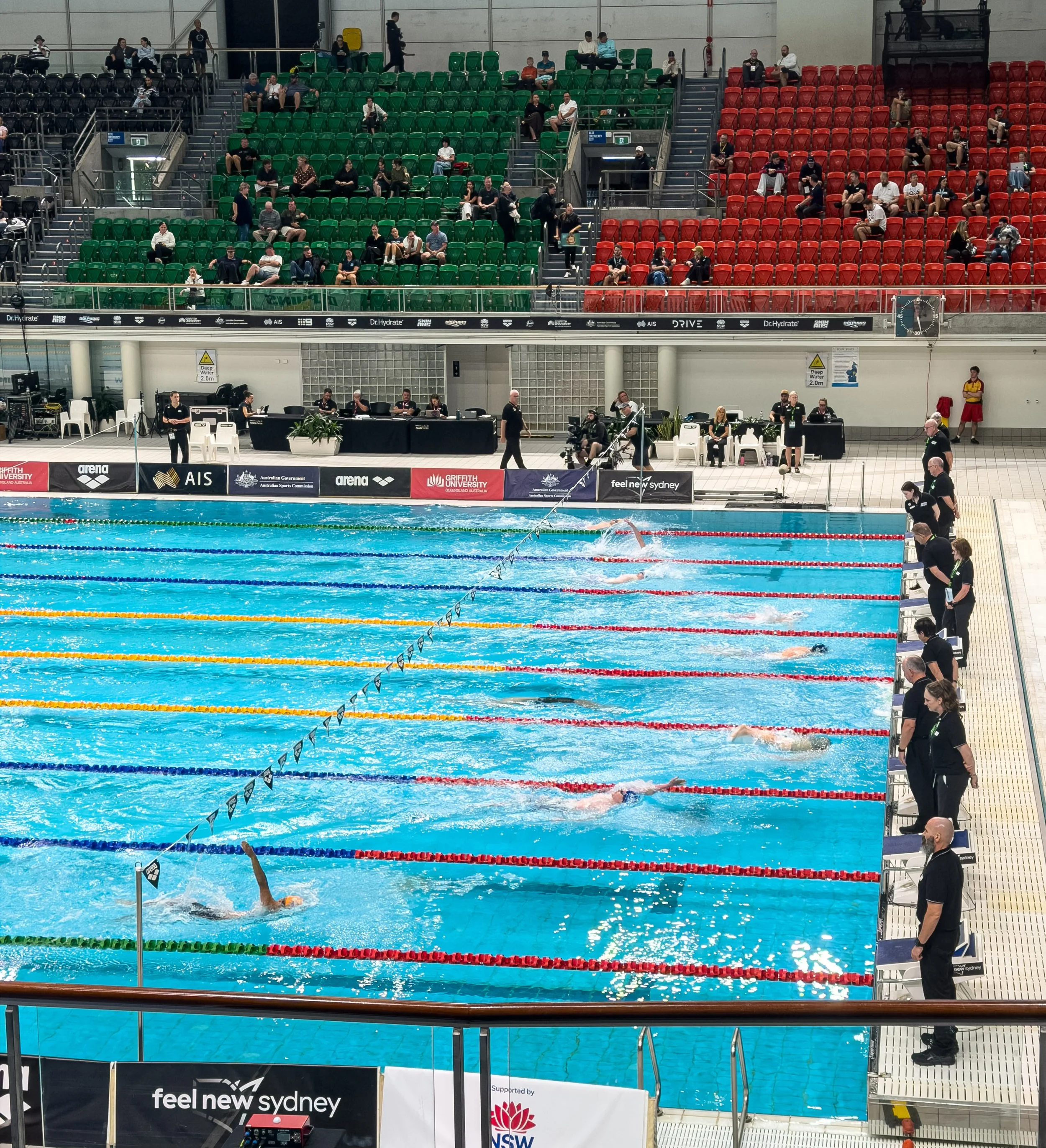
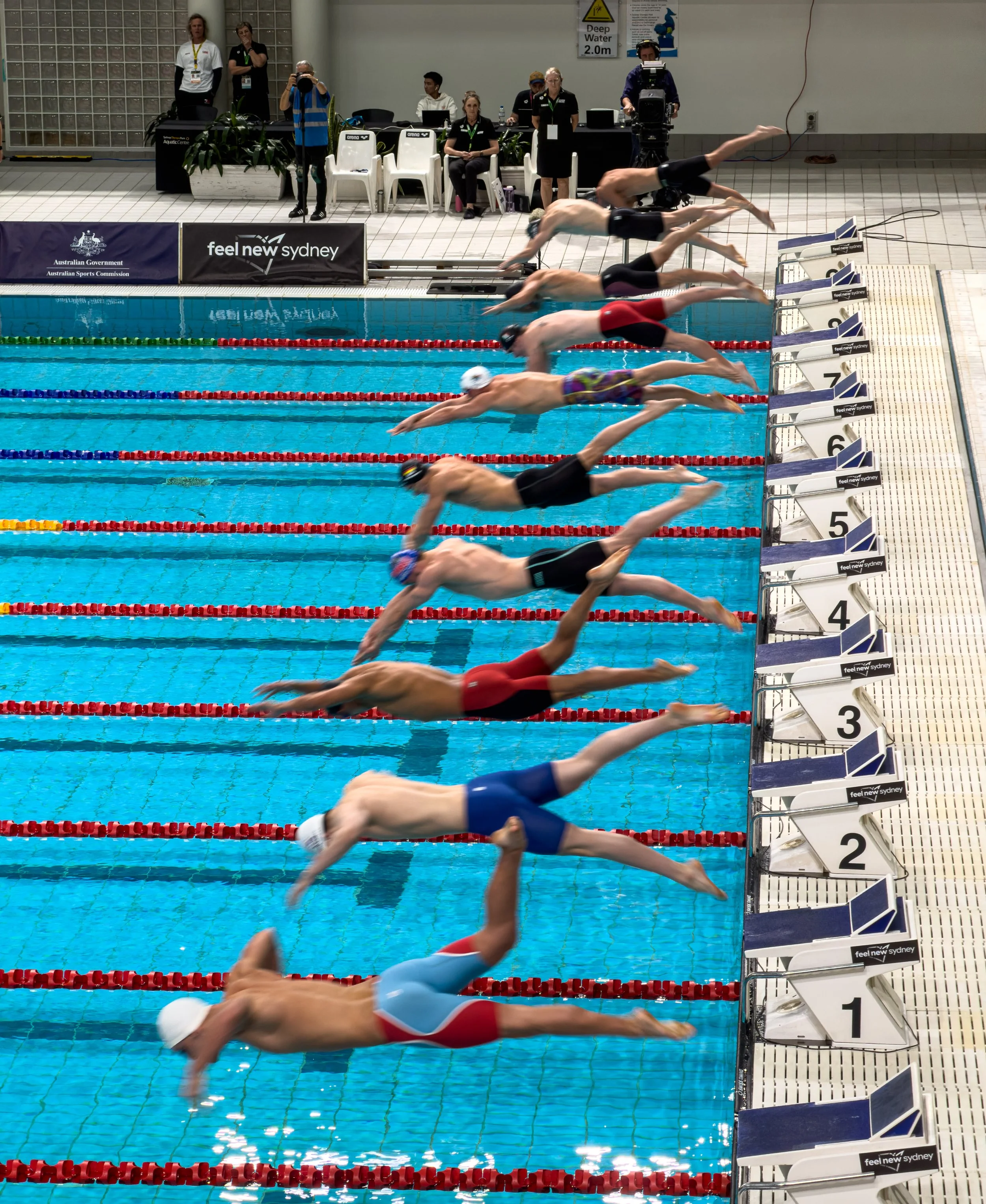
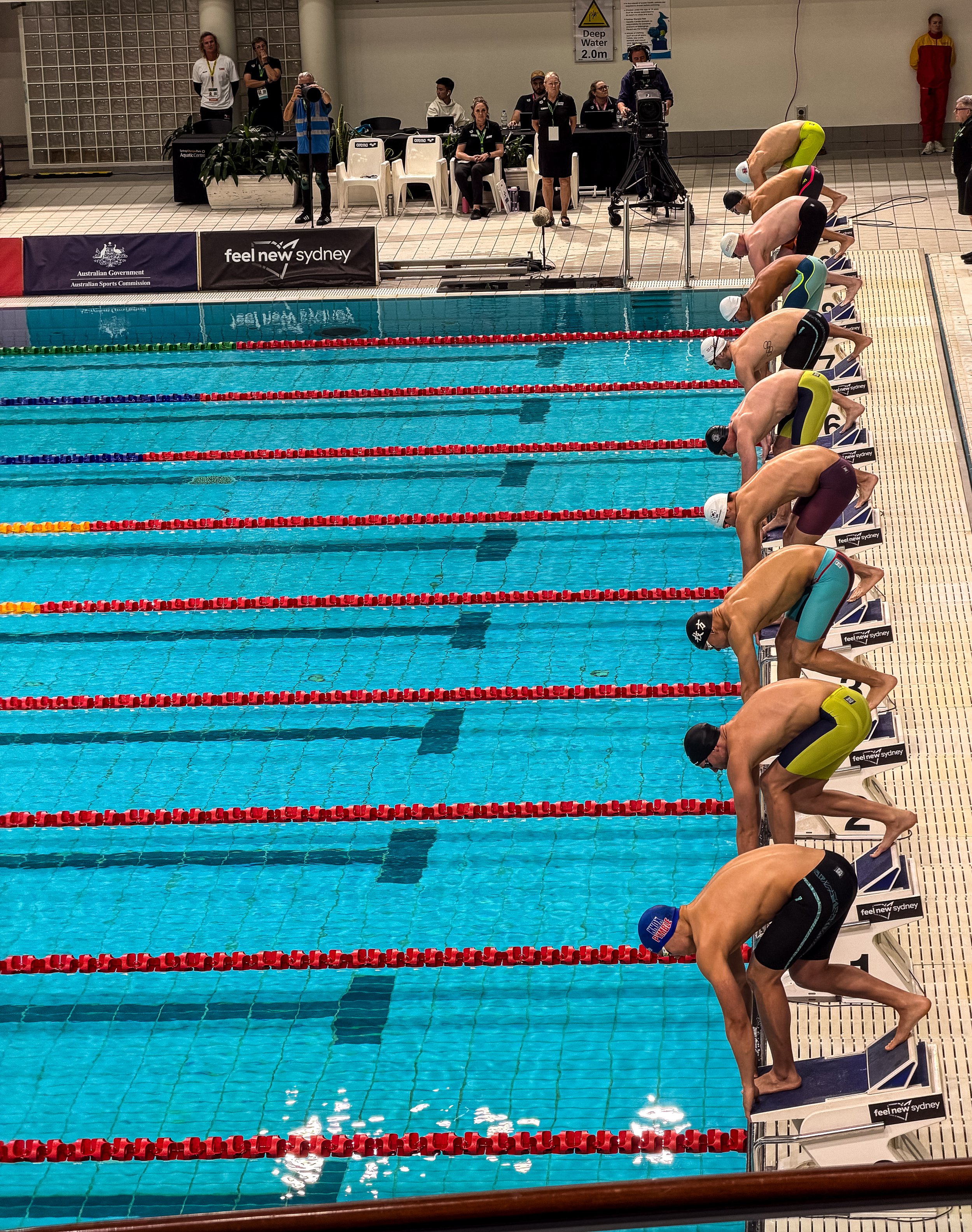
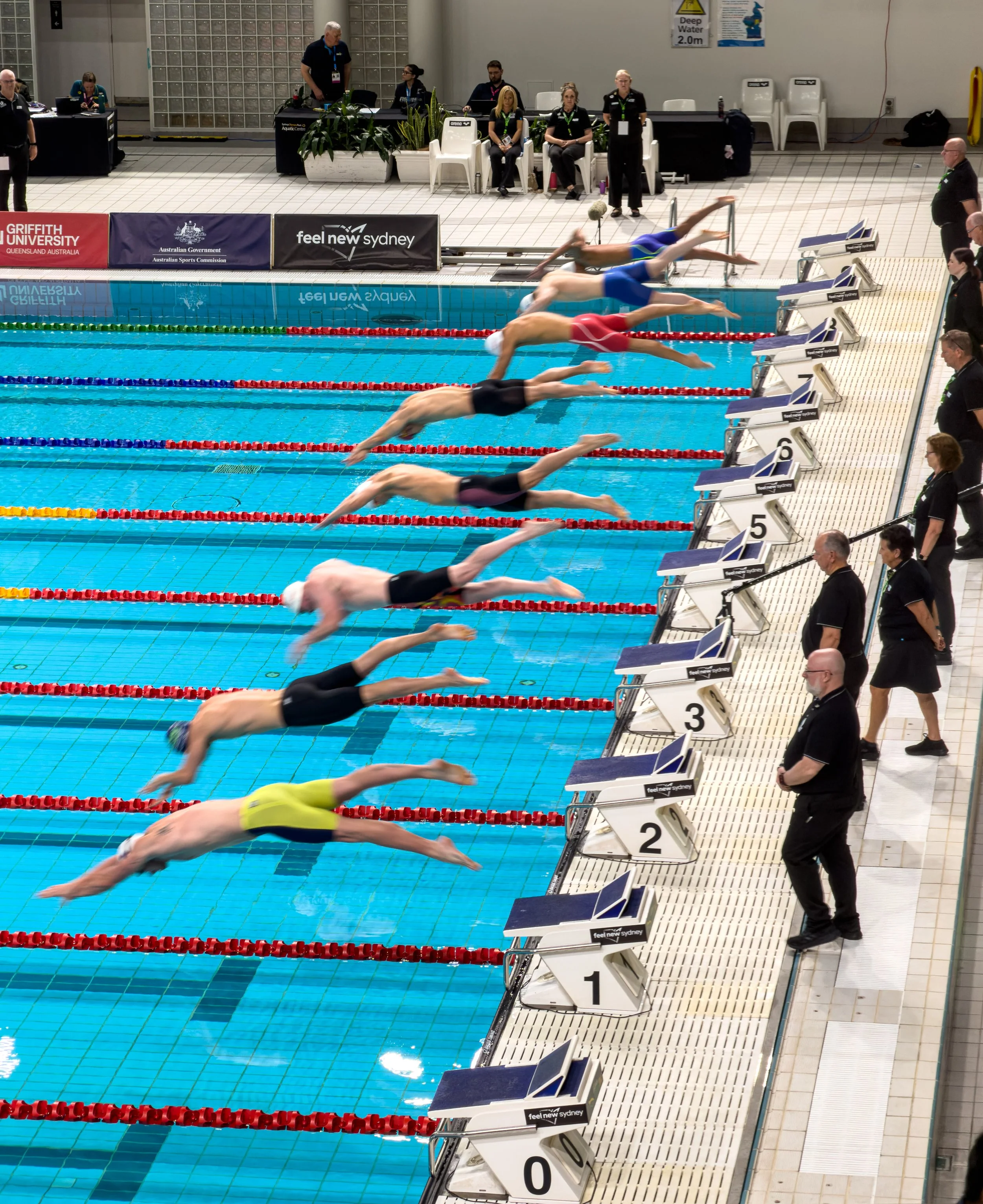
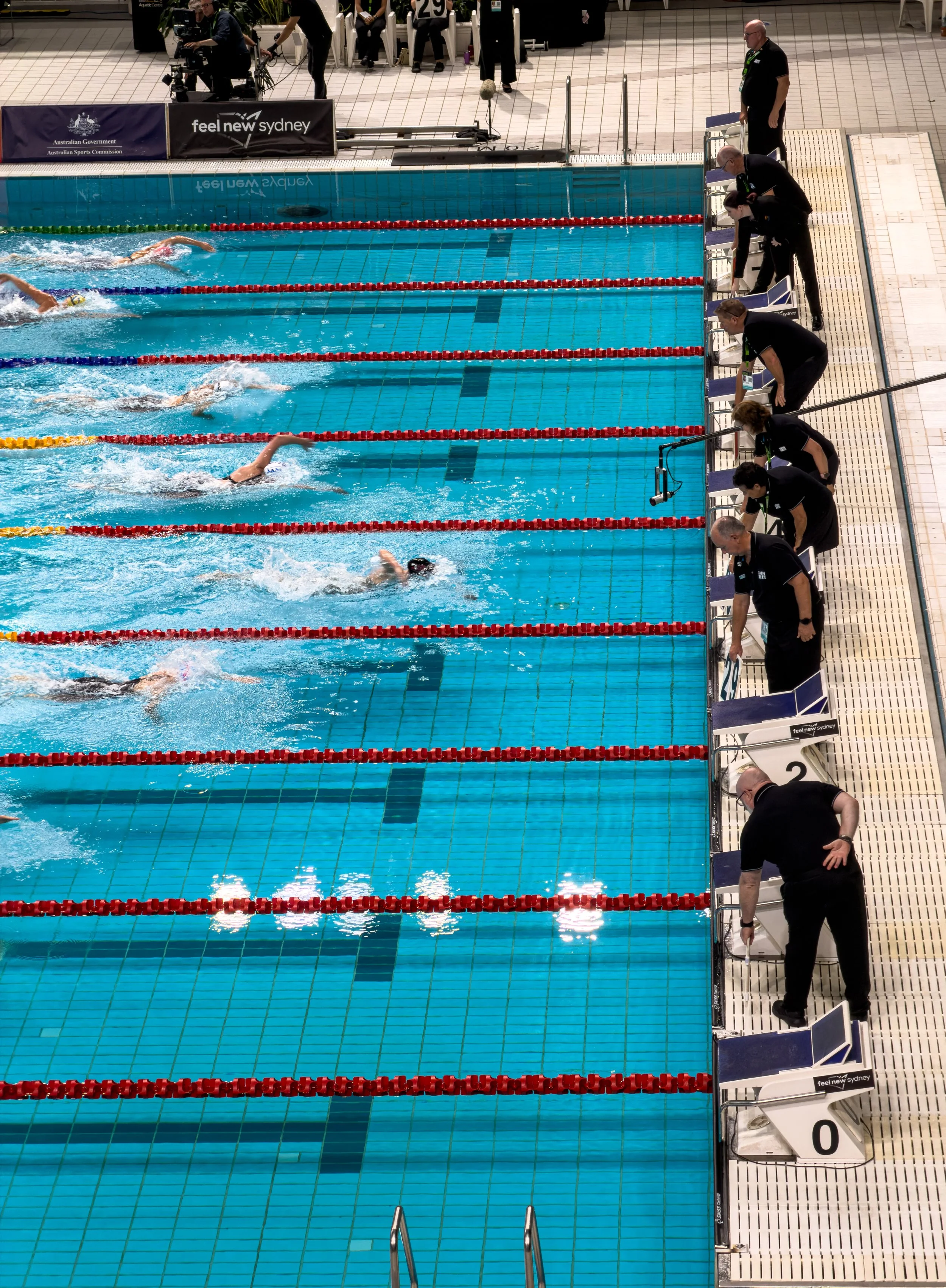
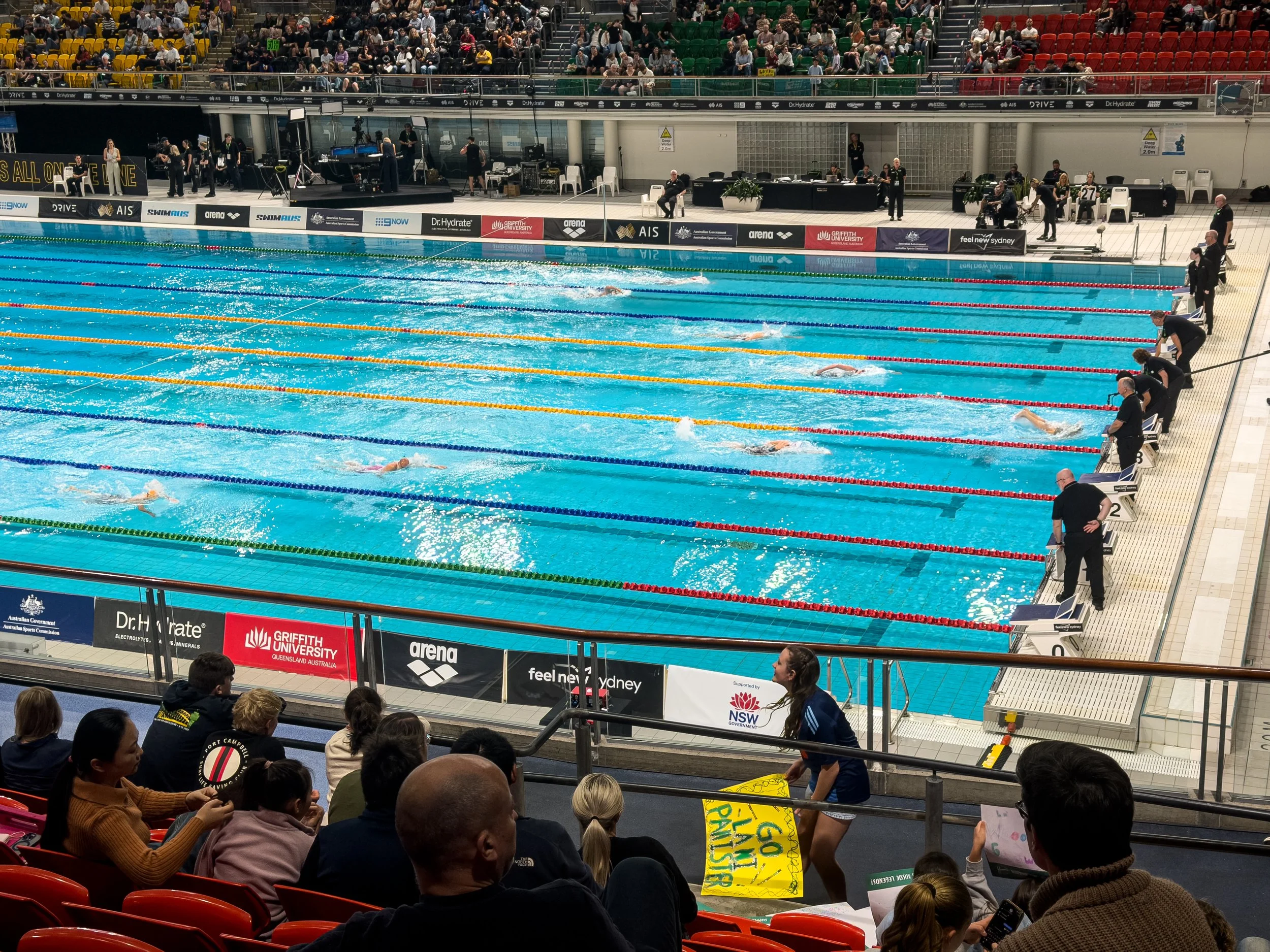
There were no dance cams, no light shows, and no blaring music. It was just a machine of qualification. We watched as ten lanes were packed with athletes, with the next heat often climbing onto the blocks before the previous swimmers had fully cleared the pool. On several occasions, new competitors were launching into their races while exhausted swimmers from the previous heat were still in the water below; a visual reminder of the relentless efficiency of elite swimming. It’s a ruthless schedule, but necessary at this level. I spent much of the morning fixated on the reaction times, a metric invisible to the naked eye in my younger days but now quantified to the millisecond. Seeing elite starters leave the blocks in the mid-0.5s range, while most drifted toward the 0.7s and the slow ones closed in on 1s, drove home the reality of this sport: at this level, gold medals are often decided before the swimmers even hit the water.
The Evening Climax: Where the Process Pays Off
By the time the evening finals arrived, the "business" of the morning had transformed into pure spectacle. To my eyes, the crowd had expanded significantly compared to previous nights; the atmosphere was energetic, and the theatre of a Saturday night session was in full effect.
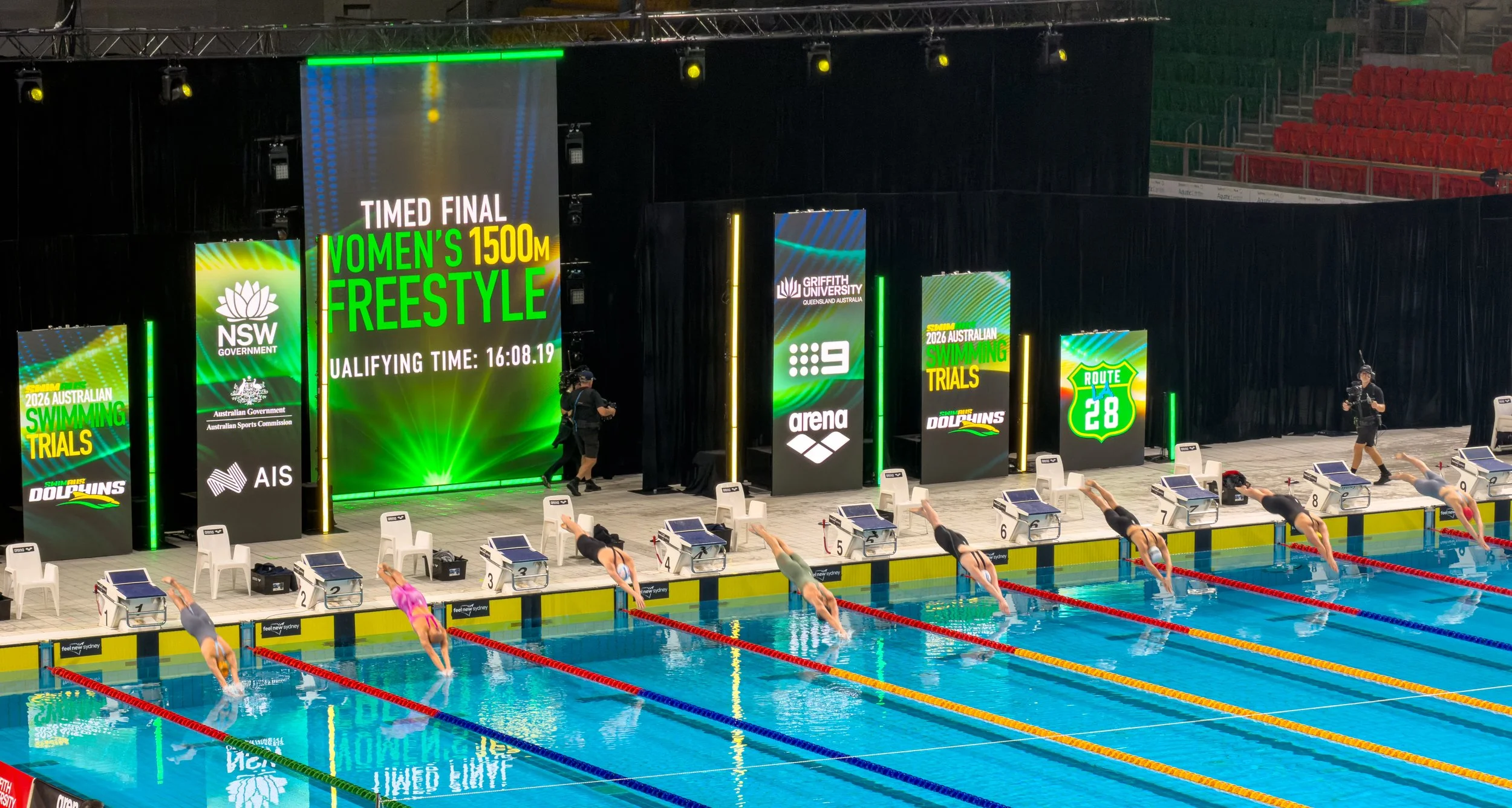
This was the payoff. Watching the finals, the clinical precision of the morning suddenly made sense. The evening session was simply the public expression of thousands of unseen repetitions. The 400m Individual Medley, a brutal, gruelling test of versatility that I honestly find more daunting than the 1500m, was a highlight. But the night belonged to Lani Pallister in the 1500m. She didn’t just win; she won by more than thirty seconds, effectively finishing a full 50-metre lap ahead of second place and over 130 metres clear of some of the field. In a national championship final, those margins are almost difficult to comprehend. It was the perfect synthesis of the day: her dominance was the result of those thousands of early-morning "process" moments, finally unleashed.
“QT” (qualifying time) is a phrase heard constantly at these trials. Being first in the country is one thing; becoming a Dolphin often requires something more—the ability to swim under an unforgiving time standard. It brought me back to those reaction times. In races such as the women’s 50m freestyle and men’s 50m butterfly, where entire finals can be covered by little more than a second, the smallest details suddenly become everything.
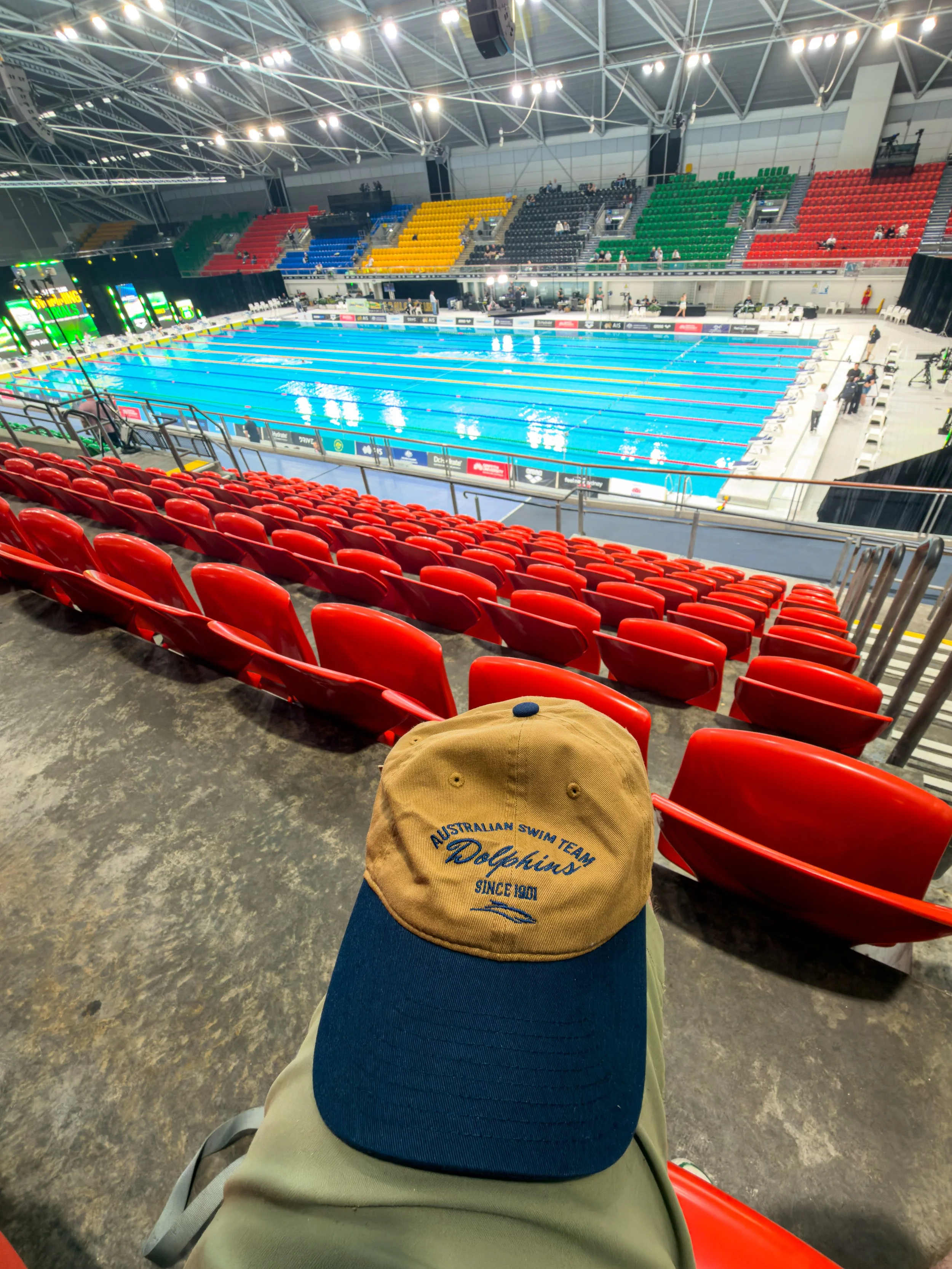
The Australian swim team is known as the Dolphins. I still find the name slightly amusing, though not enough to stop me from buying a cap and adding it to the collection.
As I left the venue, listening to the final announcements echoing back toward the train station, I was physically drained but impressed. Australian swimming currently looks extraordinarily strong, and watching these athletes transition from the anonymous grind of the heats to the roaring triumph of the finals was a reminder that excellence isn’t just a result; it’s the process that makes the result possible.