swimming the crowd
More Than Just the Race
I’m back at the Australian Swimming Trials for my second night in the stands; day four, to be precise. It’s the same event, yet it somehow feels entirely different. New strokes, new races, new athletes, and familiar faces all chasing the same goal. The pool may be unchanged, but the stories unfolding around it certainly aren’t.
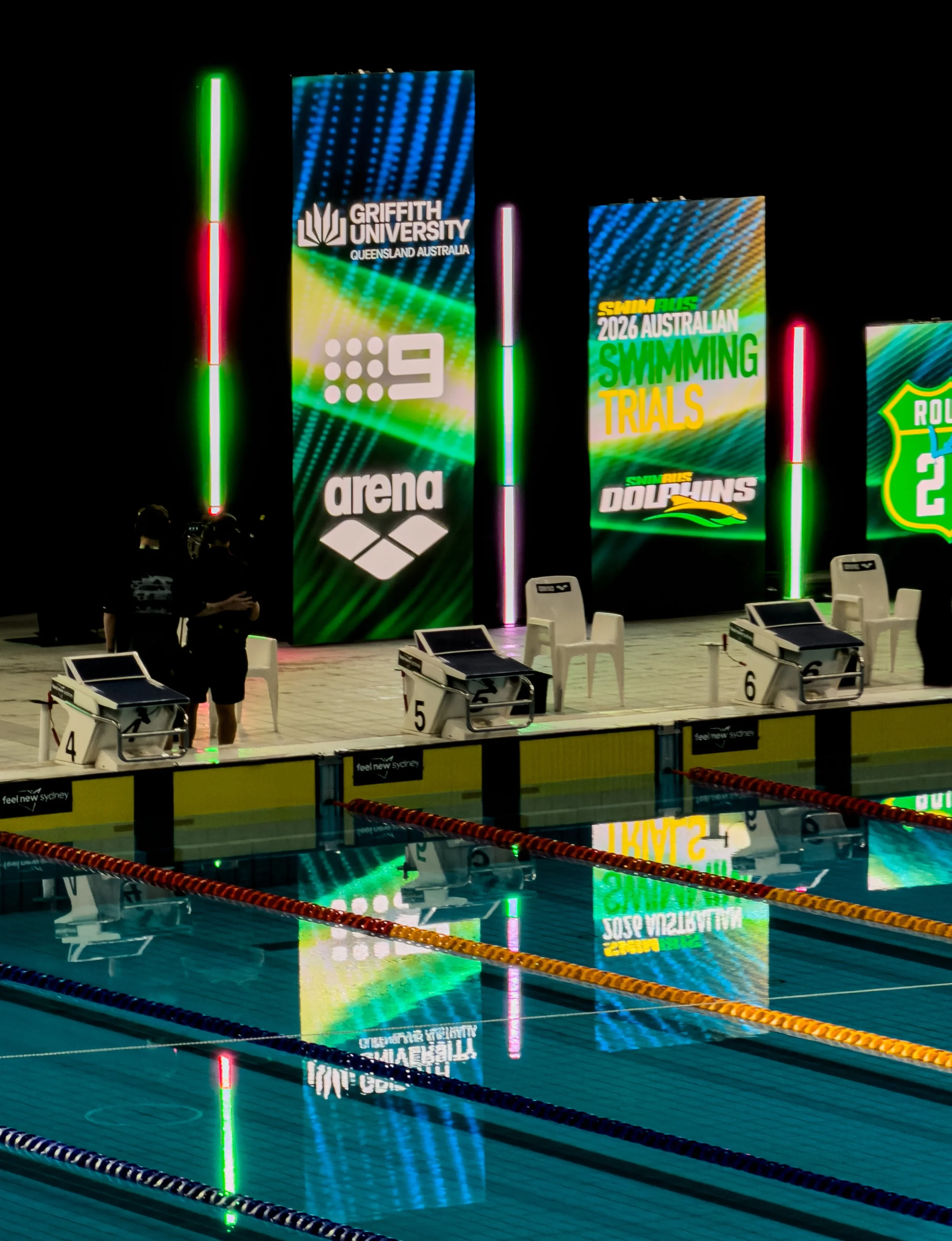
The crowd tonight was noticeably smaller than on my first visit. Looking around, I suspect I may have overestimated attendance the other night; 15–20% of capacity feels more realistic. What hadn’t changed was the presentation. The same rock-concert-like lighting swept across the pool deck, music echoed through the venue between races, and the event still carried an energy that felt far larger than the crowd size suggested.
What surprised me was just how much noise such a modest crowd could generate. During the big moments, the atmosphere swelled far beyond what the numbers suggested. It left me wondering what this venue sounds like when every seat is occupied. My guess is that the last time it truly reached that level was during the Sydney 2000 Olympics.
That thought followed me as I entered through the tunnel beneath the grandstands. Calling it a tunnel almost undersells it. The walls are lined with pieces of Australian sporting history: photographs from the venue’s construction, commemorative plaques, lists of record holders, and the handprints and footprints of Australian swimming legends. Swimming sits alongside diving and water polo, creating a broader story of aquatic sport in Australia. It’s the sort of place that rewards slowing down. You could easily spend 30 to 45 minutes exploring the displays and still miss something. I’ve already decided that Saturday’s break between sessions will be spent properly wandering through it.
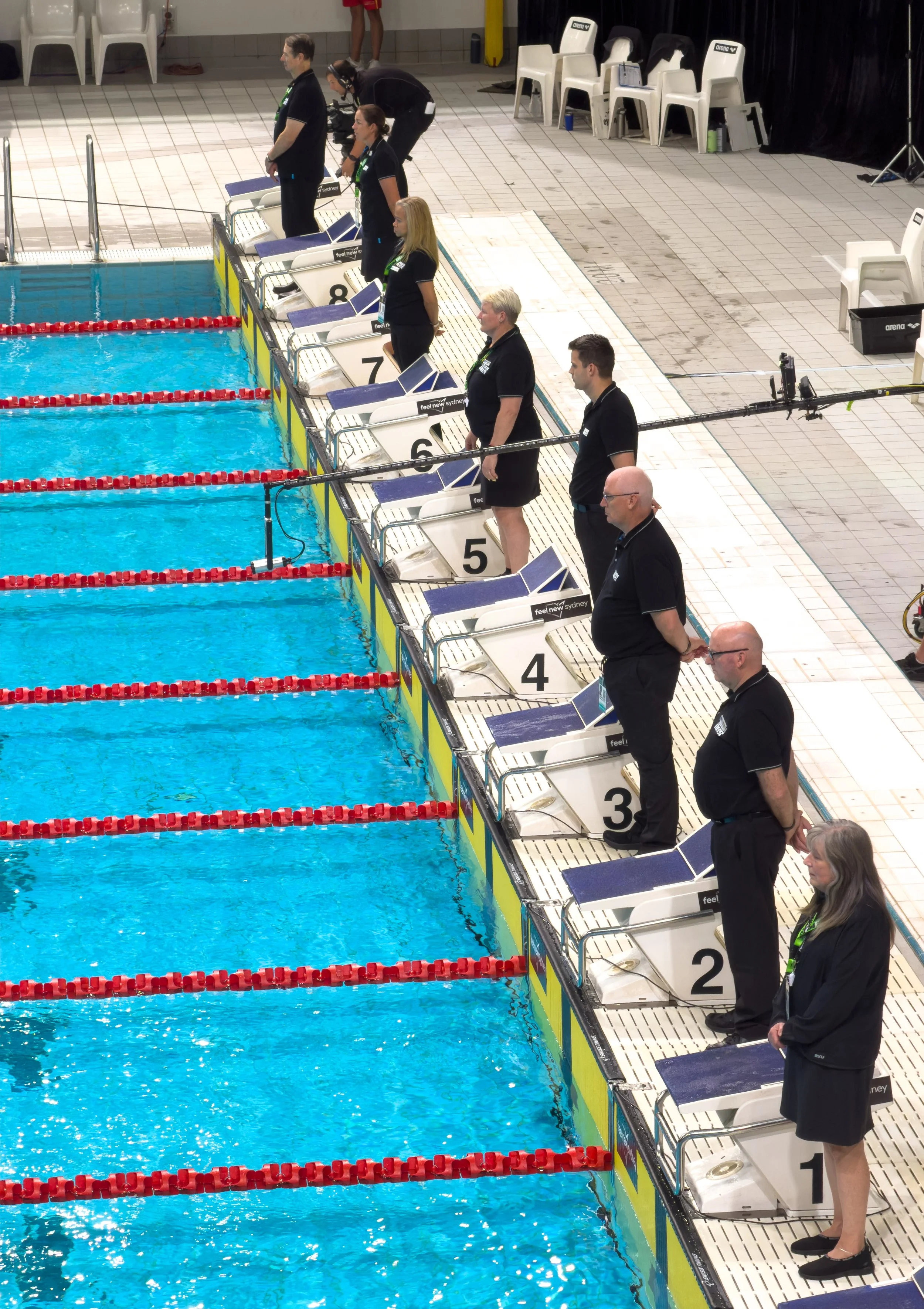
One detail that caught my attention tonight was the procession of technical officials before racing begins. Around 20 to 25 officials march onto the pool deck and take up their positions with remarkable precision. Starters, timekeepers and a variety of technical officials all move into place in what feels like a carefully choreographed routine. It is synchronisation in its own right, though probably not the kind that first comes to mind when discussing aquatic sports.
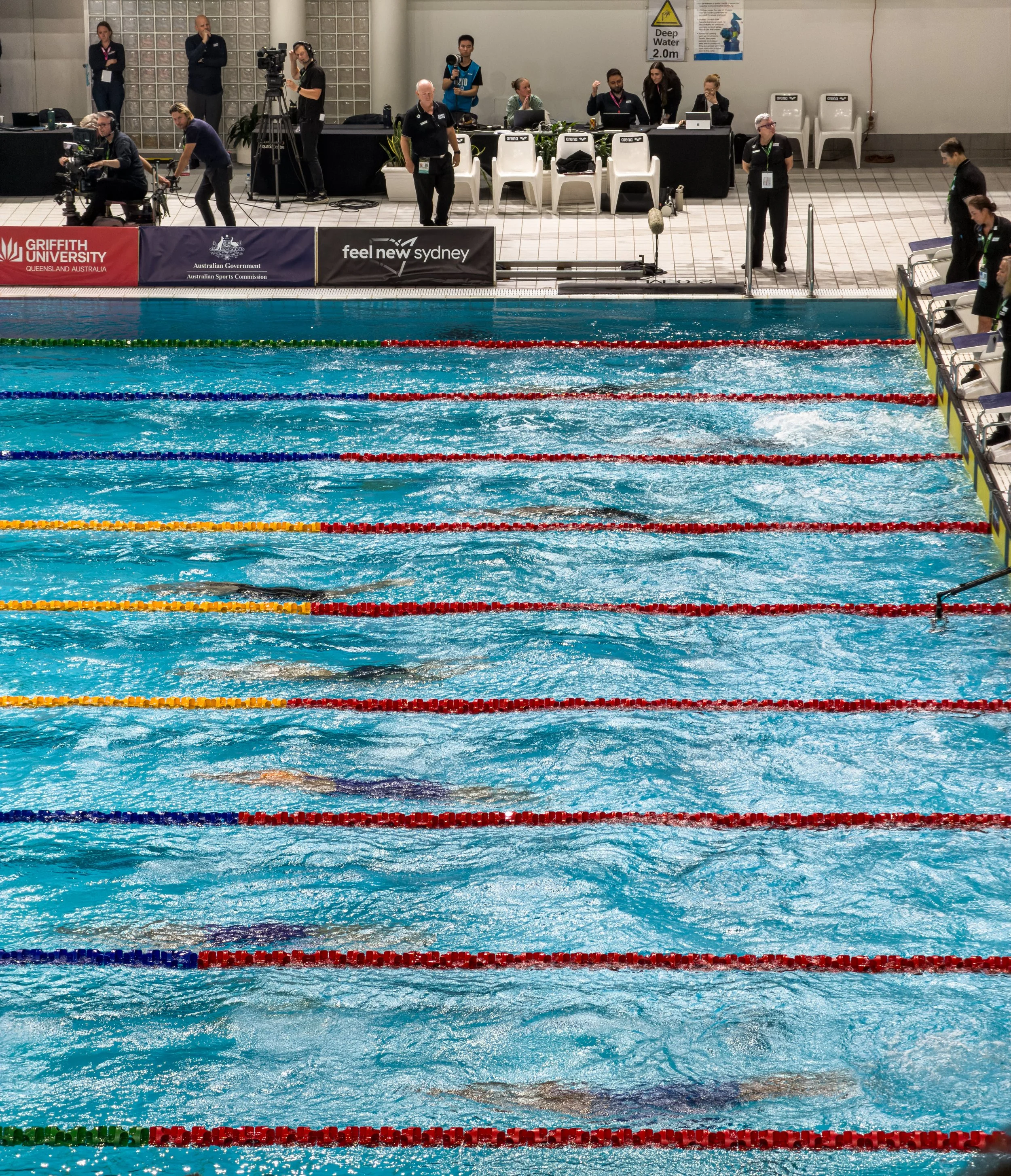
What may not be obvious in this Women’s 800m is the the winner in lane 4 is a full lap in front of the back markers - this occurred around lap 12-13 of 16
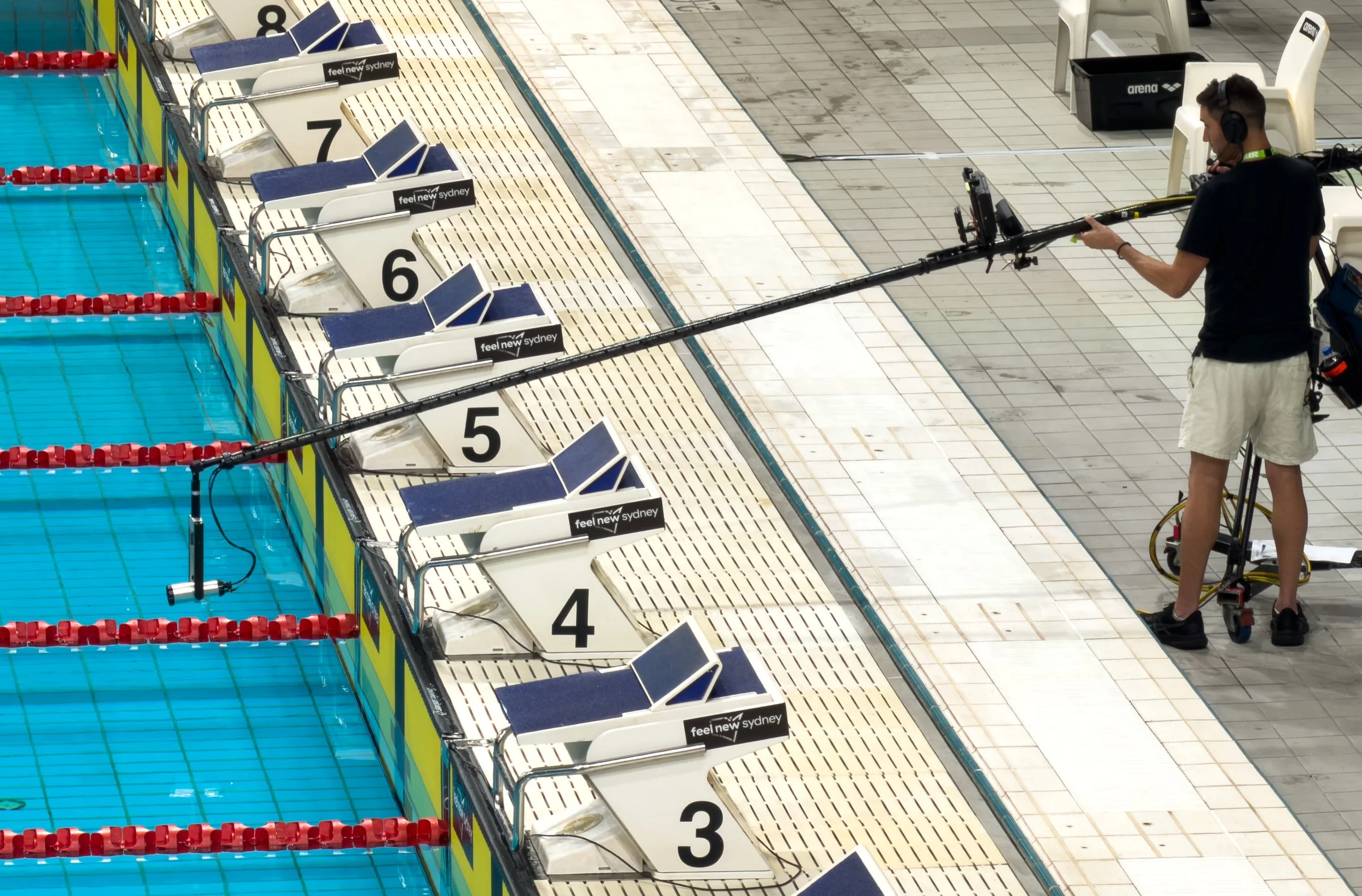
I’ve also been paying closer attention to the television production surrounding the event. Whether the coverage is live or slightly delayed, I honestly haven’t bothered to check. What is impossible to miss, however, is the sophistication of the operation. A miniature television studio sits on the pool deck, presenters move seamlessly between races, and interviews appear almost instantly after swimmers leave the water.
What has impressed me most is the way the broadcast team works the crowd. Time and again, the cameras find the right family member at exactly the right moment: a parent celebrating, a sibling waving, or someone fighting back tears. Tonight, the crowd favourite was the young daughter of a men’s 100-metre swimmer, who seemed to attract as much attention as some of the athletes themselves.
The speed and accuracy of those shots suggest the production team has a very good idea where the key stories in the crowd are unfolding. It is a small detail, but an effective one. Those human moments connect the audience at home to the competition in a way that race times and results never can. Judging by the reaction inside the venue, they work just as well on those of us watching from the stands.
Watching the officials take their positions and the television crew prepare for the night’s racing, I was struck by how many people are required before a swimmer ever steps onto the blocks. There were technical officials lining the pool deck, volunteers helping spectators and selling merchandise, television crews preparing interviews, and venue staff quietly directing people through the facility. Looking around at the relatively modest crowd, I even began to wonder whether there might have been almost as many people working at the event as watching it.
Four days into these trials, I’m finding that the swimming itself is only part of the story. The history on the walls, the precision of the officials, the television production, and the crowd all contribute to the experience. Sometimes, the most interesting things at a sporting event happen everywhere except in the pool.