
hangover cure at cromer park
Back to the Ground
After an early start watching the Socceroos’ World Cup campaign come to an end, heading across Sydney for an NPL match felt like quite a change of scale.
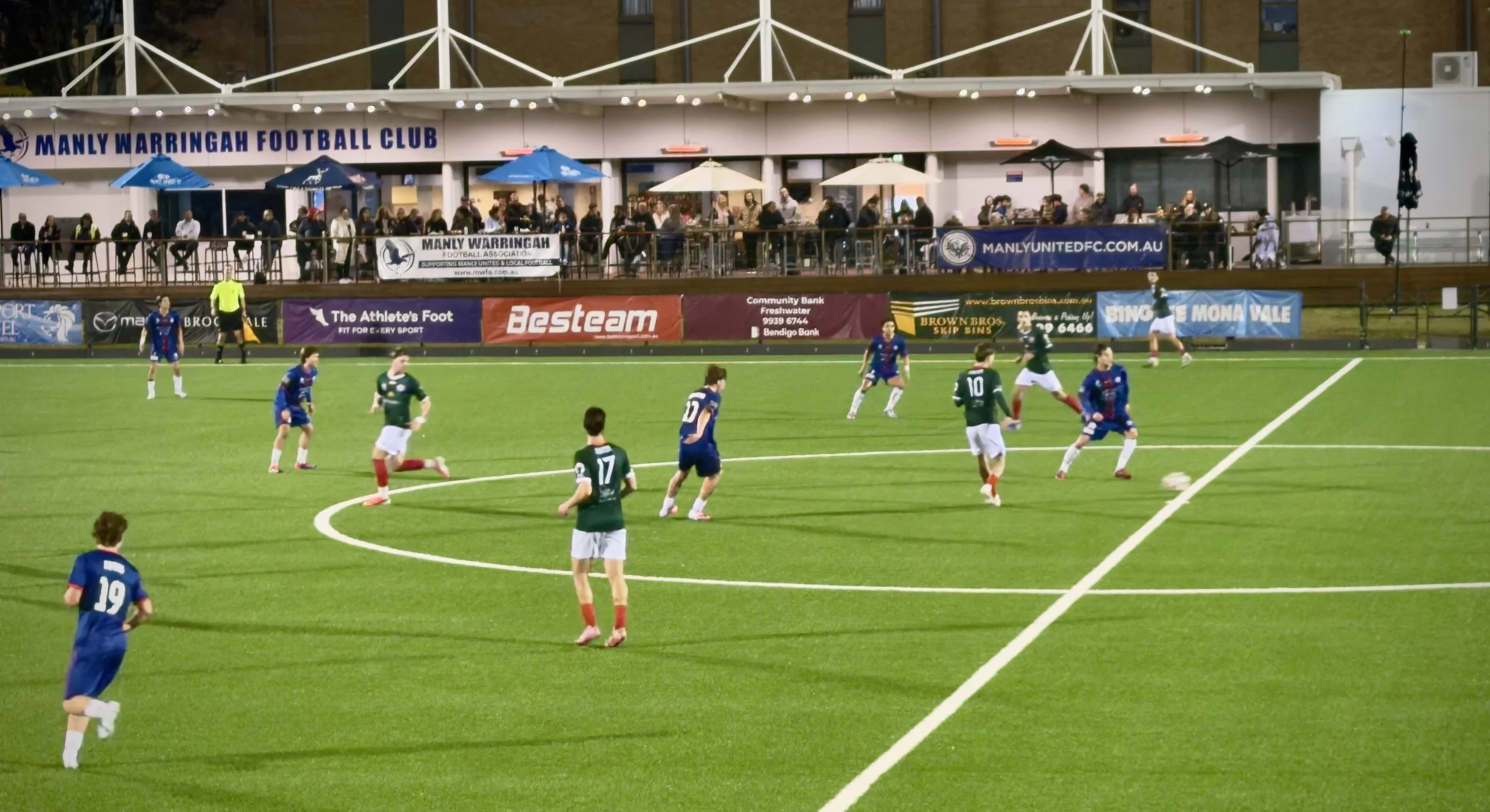
A few hours earlier, the focus had been international football, national expectation and the disappointment of Australia’s exit. By late afternoon, I was at Cromer Park with a little over a hundred other people scattered around the ground, watching Manly United take on SD Raiders.
There was no huge crowd or major occasion. It was simply another cold Saturday evening at a suburban football ground. After the emotion of the morning, that was probably exactly what I needed.
Colder Than Expected
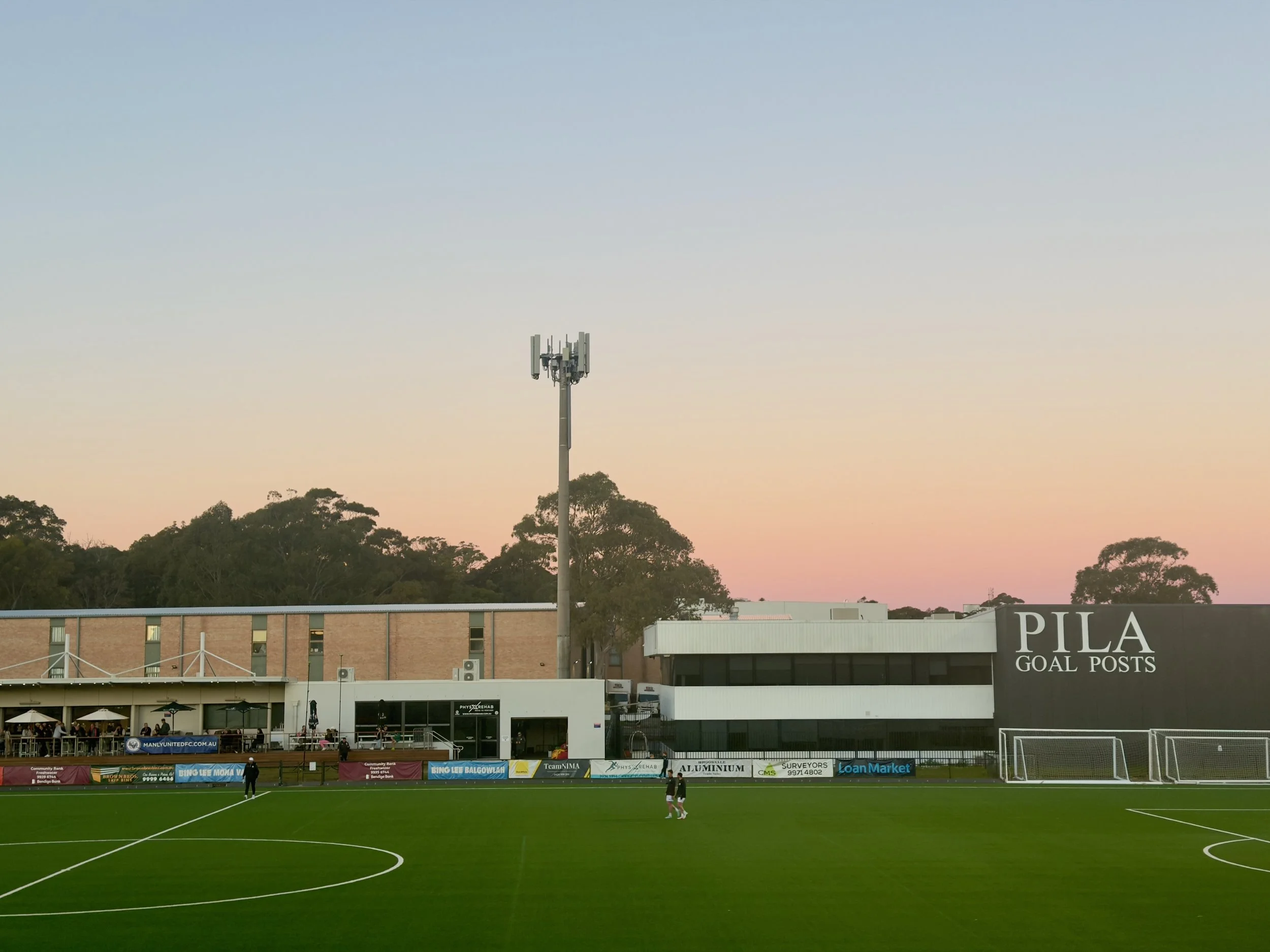
The sky was clear and the sunset added some colour behind the ground, but it was bitingly cold once the light disappeared. A hoodie over a T-shirt had seemed adequate when I left home. It was not.
The small crowd was spread between the grandstand and the edges of the pitch, which made Cromer Park feel quieter than the attendance probably deserved. I initially wondered whether everyone else was also tired after the early Socceroos match, although that may have been me projecting my own mood onto the ground.
The advertised kickoff time also came and went before the match eventually started. This is something I am beginning to associate with NPL football. A delay of five or ten minutes is not enough to damage the experience, but it is noticeable after attending sports where the start time is treated as almost immovable.
It also made me wonder whether television coverage, streaming commitments and commercial obligations sharpen the discipline around professional sport. When every minute has value to broadcasters and viewers alike, starting on time becomes part of the experience. At NPL level, those pressures are understandably different, and perhaps that allows a little more flexibility around kickoff times. I don’t know if that’s the reason, but the contrast was noticeable.
A Tight, Frustrating Contest
The match itself was close and often tense.
SD Raiders had periods where they looked composed moving forward, while Manly spent much of the evening building pressure without quite finding the final connection. Balls travelled across the goalmouth without a finishing touch. Headers went close. Promising attacks ended one pass or one movement before they became something decisive.
It was frustrating because Manly looked capable of scoring for long periods without ever seeming entirely in control.
The breakthrough eventually came from a well-taken header midway through the second half. From there, the match became less about whether Manly could create another chance and more about whether they could protect the one-goal lead.
The closing stages carried genuine tension. Manly had opportunities to make the result safer but could not take them, while SD Raiders continued to threaten enough to keep everyone engaged until the final whistle.
The 1-0 win felt earned, but never comfortable.
Frustration With the Whistle
The refereeing became a growing source of frustration, particularly for the Manly bench.
Several handball appeals and physical challenges were allowed to continue, and there were periods where it was difficult to understand where the threshold for a foul had been set. Some contact was penalised while similar challenges were ignored.
My immediate reaction was that the officiating felt below the level of the match. On reflection, that is probably too broad a judgement to make from the grandstand.
The more defensible criticism is that the decision-making felt inconsistent. Whether those decisions were right or wrong individually, the inconsistency added to the tension and left players, coaches and sections of the crowd increasingly frustrated.
How Local Is a Local Team?
As the train made its way back towards Hornsby, I realised I had spent almost as much time travelling as I had watching football.
When I first started following the NPL, NWS Spirit seemed the obvious choice. Christie Park is close to home and easy to reach. Then Manly United entered the picture.
Family heritage, existing sporting connections and a growing affinity with the club made me question that original decision. Every visit to Cromer Park has strengthened that feeling. The problem is the commute.
Getting from Hornsby to Cromer Park by public transport takes about an hour and 45 minutes each way. That is roughly three and a half hours of travel for a 90-minute match.
For a one-off game, that is manageable. For regular home fixtures across a season, it becomes a much more significant commitment.
That reality is making the decision harder.
Manly has the stronger emotional pull, but NWS Spirit has the practical advantage. Supporting a local club is partly about identity, but it is also about habit. It is about being able to turn up regularly, not just when circumstances allow.
I haven’t abandoned the idea of following Manly. The family and personal connections still matter. But the journey to Cromer Park is beginning to expose the difference between choosing a club and building a genuine routine around one.
Supporting a club is about more than colours, history or family connections.
It is about turning up on cold winter evenings when there is no headline match, no national television audience and only a small crowd gathered around the ground.
I still don’t know which club will eventually become mine. But perhaps that’s part of the journey. Supporting a team isn’t simply about choosing one. It’s about discovering which club keeps drawing you back, week after week.